 Dedupely Intelligence




TL;DR
- Duplicates often disagree on status: one says Customer, the other says New Lead.
- Keeping the oldest or newest record's value can pick the wrong one.
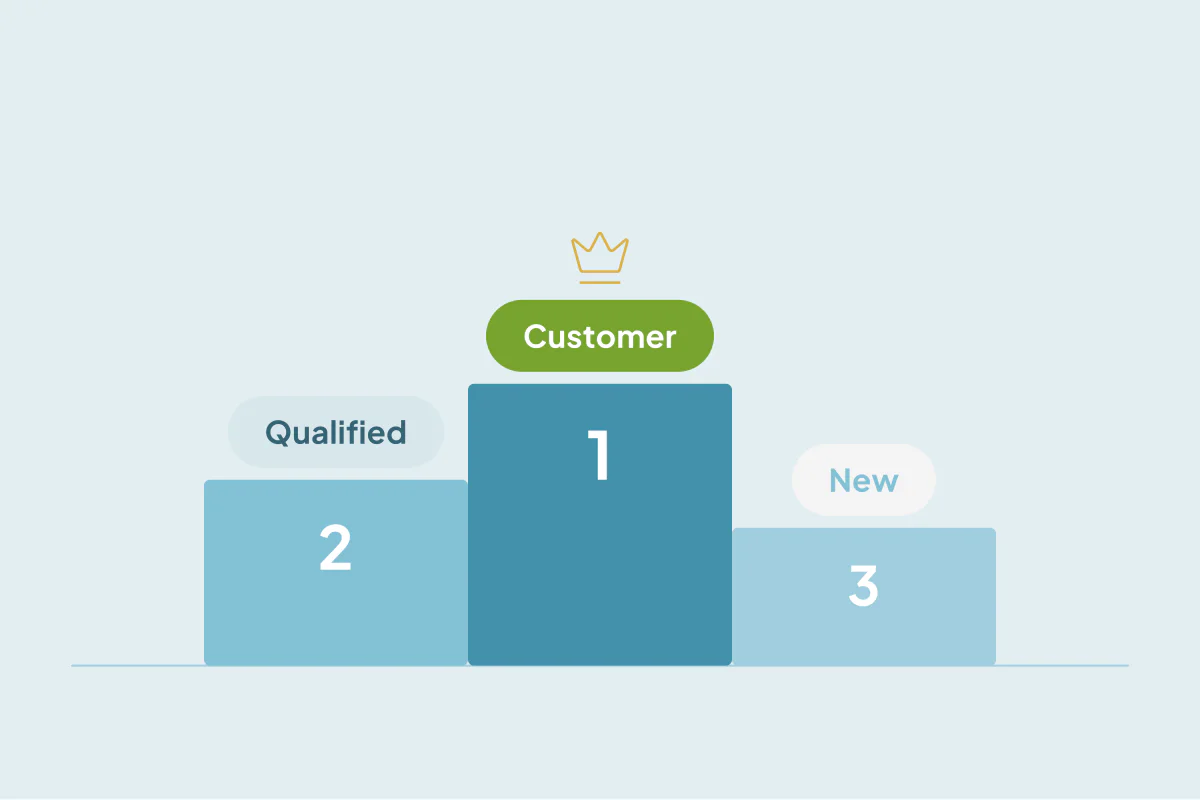
- Rank your statuses so the furthest-along or most important one wins.
- Write the ranking down and check it against a few real pairs before merging in bulk.
- In Dedupely, Win Rules run from top to bottom, so their order sets which status wins.
Two records for the same person, and they disagree. One says the person is a customer. The other, created last week by a form, says they're a new lead. When you merge them, the record can only keep one status.
If the merge keeps whatever the oldest record says, or the newest, you'll sometimes get it wrong. A customer marked as a new lead gets prospecting emails. A disqualified lead marked as open goes back into a rep's queue.
This post covers how to decide which status wins and how to make that decision the same for every merge.
Why "oldest" or "newest" isn't enough
Most merges pick one record as the primary and keep its values. That works for many fields, but status isn't about age.
- The oldest record may hold the most history, but its status may be out of date.
- The newest record is often the one a form or import just created, so it has the default status, like "New."
- The last updated record may have been touched by an integration that didn't change the status at all.
Status is a stage. What matters is how far along the person is, or which status your team acts on.
Rank your statuses
The fix is a ranking: an ordered list where the higher status always wins.
A typical ranking for a lead status field:
| Rank | Status | Why it wins over the ones below |
|---|---|---|
| 1 | Customer | They've bought. Everything else is out of date |
| 2 | Opportunity / In negotiation | A deal is open |
| 3 | Qualified | A rep confirmed interest |
| 4 | Contacted | Someone reached out |
| 5 | New | The default value most tools set |
| 6 | Unqualified / Disqualified | Only wins if nothing else applies |
Your ranking depends on how your team works. Some teams put "Do not contact" at the top, because a request to stop contact should never be lost in a merge. Others rank "Disqualified" above "New," so a lead that was ruled out doesn't reappear as fresh.
Check the ranking against real pairs
Before merging in bulk, pull ten or twenty real duplicate pairs with different statuses. For each one, say which status should win, then check the ranking picks the same one. Where it doesn't, adjust the order.
Common surprises:
- A status your team stopped using that still sits on old records.
- Statuses written slightly differently by different tools ("Customer" and "customer").
- A status that means different things to sales and marketing.
Getting sales, marketing and support to agree on duplicates covers how to settle those differences before a cleanup.
Other fields that need the same treatment
Status isn't the only field where a ranking beats "oldest" or "newest." The same approach works for:
- Lifecycle stage, where some CRMs already keep the furthest stage on merge.
- Lead source, where you may want the first source to win, not the last.
- Owner, where the active rep should win over a former employee.
- Priority or tier, where the highest should win.
How to rank statuses in Dedupely
In Dedupely, Merge Rules let you set field-level rules for any synced field. Custom Win Rules use operators like "is equal to" with the status values you choose, and Win Rules are checked from top to bottom, so their order is your ranking. Lose Rules are checked first, so you can stop a value like "New" from winning unless no other status exists.
You can preview the merged result before merging, so you can test the ranking on real pairs first.
Decide once, merge consistently
When duplicates disagree on status, age is a poor tie-breaker. A ranked list of statuses, with the most important one on top, makes the right status win every time.
Write the ranking down, test it on real pairs and put protective statuses like "Do not contact" first. Then every merge keeps the status your team would have picked by hand.
Frequently asked questions
Which lead status should win when I merge duplicates?
The one furthest along or most important to your team, usually Customer, then open opportunity, then qualified. Rank your statuses and let the highest win.
Why not just keep the newest record's status?
The newest record is often created by a form or import with a default status like "New." Keeping it can turn a customer back into a lead.
What about "Do not contact" or unsubscribed statuses?
Put them at the top of your ranking. A request to stop contact should survive every merge.
Does the same approach work for lifecycle stage?
Yes. Rank the stages so the furthest one wins. Some CRMs already do this on their own merge, but check before relying on it.
How do I test a status ranking?
Take ten or twenty real duplicate pairs with different statuses, decide which should win and check the ranking agrees. Adjust the order where it doesn't.




 Or sign up with Google
 HubSpot Marketplace