 Dedupely Intelligence




TL;DR
- Clients usually quote the number of contacts they think they have, not the records in the CRM.
- Companies, deals, leads, archived records and other objects add up.
- Size the CRM yourself before you quote, by object.
- If the estimate was wrong, rescope by object instead of absorbing it.
- Dedupely shows the synced record count, and syncing never changes the CRM.
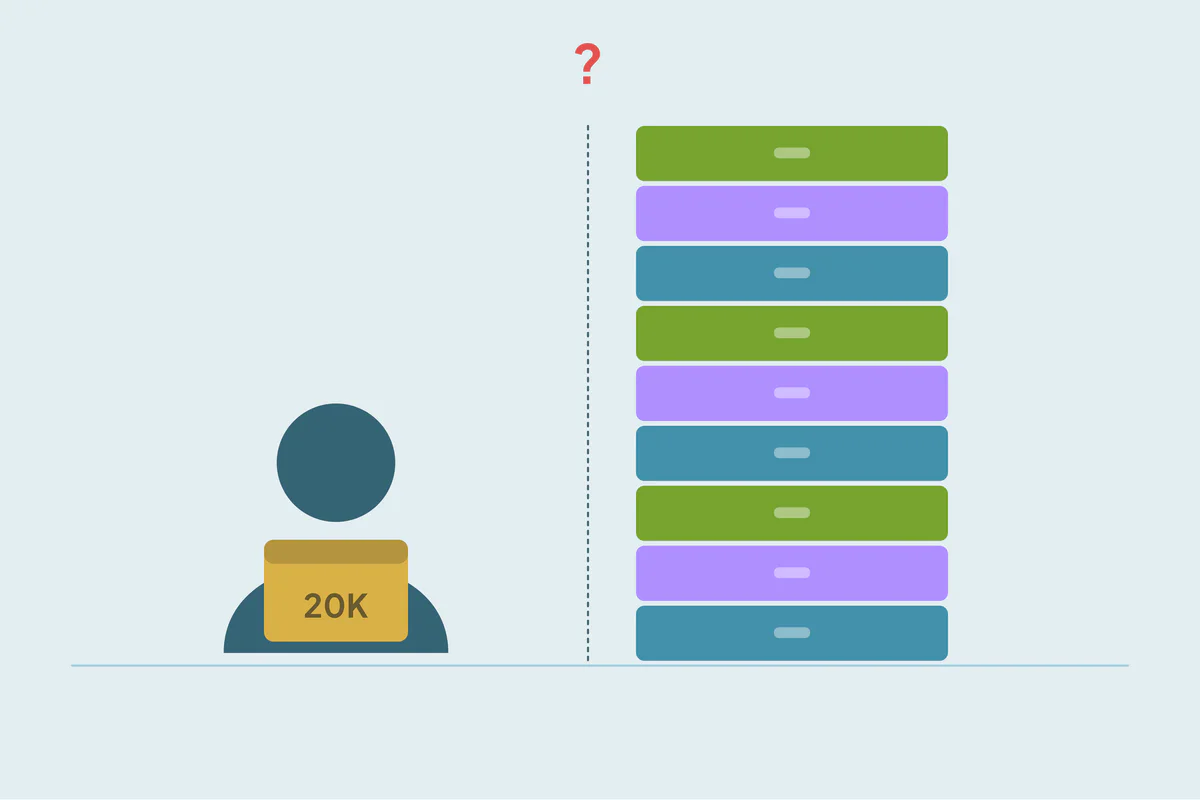
The client said "about 20,000 contacts". You quoted for it. Then you connect the CRM and find 52,000 contacts, 18,000 companies, 9,000 deals and 60,000 records in an old custom object. It happens on a lot of projects, because clients describe the CRM they use, not the one that exists.
Why the numbers differ
| What the client counted | What they missed |
|---|---|
| Contacts the team works with | Contacts nobody has touched in years |
| Their own pipeline | Other teams' pipelines and objects |
| Active records | Archived or inactive records |
| Contacts | Companies, deals, leads, tickets, custom objects |
| One CRM | A second portal or org |
Duplicates add to it too: the more duplicates, the bigger the CRM, and the more work the cleanup is.
Size the CRM before you quote
- Ask for read access before the proposal, or a screen share of the record counts.
- Count by object: contacts, companies, deals, leads, tickets, custom objects.
- Include archived and inactive records, if they'll be part of the cleanup.
- Estimate duplicates per object with a quick search, not a guess.
- Write the counts into the scope, with what happens if they're wrong.
When the estimate was wrong anyway
- Tell the client early, with the numbers by object.
- Offer options: clean the objects in the original scope, phase the rest, or rescope the whole project.
- Price by object or record range, not as one lump sum.
- Don't absorb the difference quietly. It sets the price for every future project with that client.
How Dedupely helps size a client's CRM
In Dedupely, connecting and syncing never change the client's CRM, so you can sync before you quote and see the record count by object. Billing is based on the number of synced records, and the free trial shows the synced record count, so you see what a CRM holds before anyone pays. You choose which objects to sync, so a cleanup can start with the objects in scope. Duplicate Searches show how many matches and records they find, which gives you the duplicate estimate for the proposal.
Count before you quote
Clients describe the CRM they use, not the one that exists. Count records by object before you quote, write the counts into the scope and rescope by object when the numbers turn out bigger.
Frequently asked questions
What do I do when a client's CRM is bigger than they said?
Tell them early, show the counts by object and offer to phase or rescope the project.
Why do clients underestimate their CRM size?
They count the contacts their team works with, not every record and object in the CRM.
How do I count records before quoting?
Get read access or a screen share, and count each object, including archived records if they're in scope.
Should I price a cleanup by record count?
Pricing by object or record range makes changes easier to handle than one lump sum.
Can I see a client's record count without changing their CRM?
Yes, with a tool that only reads the CRM until you merge.





 Or sign up with Google
 HubSpot Marketplace