 Dedupely Intelligence




TL;DR
- Many teams close duplicate deals as lost because it's quick.
- A closed-lost duplicate counts as a real loss and lowers your win rate.
- Merging keeps one deal with all the activity from both.
- Deleting works for empty duplicates with no activity worth keeping.
- Dedupely can merge deals in HubSpot, Pipedrive and Close.
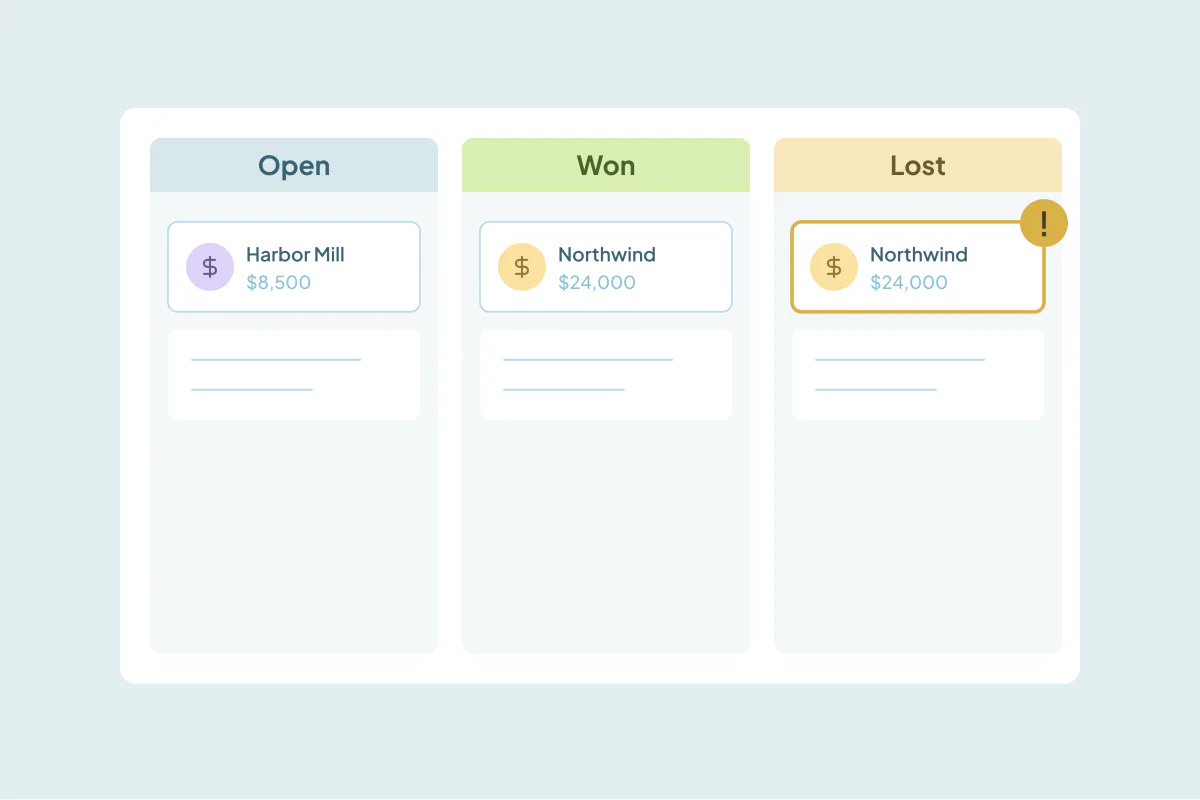
A rep notices two deals for the same opportunity. The quickest fix is to close one as lost, maybe with a reason like "duplicate." It disappears from the pipeline, and everyone moves on.
The problem shows up later, in reports. That closed-lost deal is counted as a real loss. Your win rate drops, your lost reasons fill up with "duplicate" and anyone looking at the history sees an opportunity you never really lost.
This post covers the three options for a duplicate deal, merging, closing and deleting, and when each one fits.
The three options
| Option | What happens | Good for | Watch for |
|---|---|---|---|
| Merge | One deal remains, with activity and contacts from both | Duplicates where both deals have history | Amount, stage and close date need the right values |
| Close as lost | The duplicate stays as a lost deal | Rarely the right choice | Skews win rate and lost reasons |
| Delete | The duplicate is removed | Empty duplicates with no activity | Activity on the deleted deal is lost |
Why closing as lost causes trouble
Closing a duplicate as lost feels safe, because nothing is deleted. But a closed-lost deal is a data point:
- Win rate: every duplicate closed as lost adds a loss that never happened. If one in ten of your losses is a duplicate, your real win rate is higher than the one you report.
- Lost reasons: "duplicate" crowds out the reasons that tell you why you really lose.
- Forecasting and history: old pipelines look worse than they were, which affects targets based on them.
- Activity split: calls and emails logged on the closed deal stay there, away from the real one.
Some teams try to fix this by filtering "duplicate" out of reports. That works until someone forgets the filter.
When to merge
Merge when both deals have something worth keeping: activity, notes, contacts or line items. A merge leaves one deal with the full history.
Before merging, decide which values win, because deals have fields where it matters:
- Stage: usually the furthest along.
- Amount: usually the most recent or the one the rep confirmed.
- Close date: usually the one on the active deal.
- Owner: the rep working the deal now.
Duplicate deals and how they inflate your pipeline covers how to find them.
When to delete
Delete when the duplicate is empty: created by an integration or a double click, with no activity, notes or line items. There's nothing to keep, and merging it adds nothing.
Check your CRM's recovery window before deleting in bulk, so you know how long you have if you delete the wrong one.
When closing is acceptable
Close as lost only if you can't merge or delete, for example because of permissions, and you exclude those deals from reports with a dedicated lost reason. Treat it as a temporary step, not the fix.
How Dedupely handles duplicate deals
Dedupely can find and merge deals in HubSpot (Deals), Salesforce (Opportunities), Pipedrive (Deals) and Close (Opportunities). Archived Pipedrive deals can't be merged. Merge Rules let you choose which stage, amount, close date and owner win, and you can preview the merged deal before merging.
Each merge is logged in Merge History, so you can see what was combined.
Merge, don't lose
Closing a duplicate deal as lost is quick, but it turns a data problem into a reporting problem. Merge duplicates that have history, delete the empty ones and keep closed-lost for deals you really lost.
Your win rate and lost reasons then reflect what happened in your pipeline.
Frequently asked questions
Should I close duplicate deals as lost?
Usually not. A closed-lost duplicate counts as a real loss, which lowers your win rate and adds "duplicate" to your lost reasons.
When should I merge a duplicate deal?
When both deals have activity, notes, contacts or line items. Merging keeps one deal with the full history.
When is deleting a duplicate deal OK?
When the duplicate is empty, with no activity or line items. Check your CRM's recovery window first.
Which values should win when I merge two deals?
Usually the furthest stage, the confirmed amount, the active close date and the current owner. Decide before merging in bulk.
How do I fix duplicates we already closed as lost?
Find them by their lost reason, check whether they hold activity and merge them into the real deal.





 Or sign up with Google
 HubSpot Marketplace