 Dedupely Intelligence




TL;DR
- When several systems hold the same customer, they disagree, and the sync creates duplicates.
- Decide ownership by field: billing data, contact details and consent can each have a different owner.
- The system that creates the record usually owns its identity and ID.
- Clean duplicates in the owning system first, then let the sync carry the fix.
- Dedupely cleans the CRM side and lets you choose which value wins in each field.
Most companies keep customer data in more than one place. The CRM has contacts and deals. The ERP or billing tool has accounts and invoices. The marketing tool has subscribers. Syncs connect them, and every sync has to decide what to do when the systems disagree.
When nobody has decided which system owns the record, the syncs guess. They create a new record when they can't find a match, overwrite good data with stale data and send duplicates back and forth. This post covers how to decide who owns what.
Why "one source of truth" is rarely one system
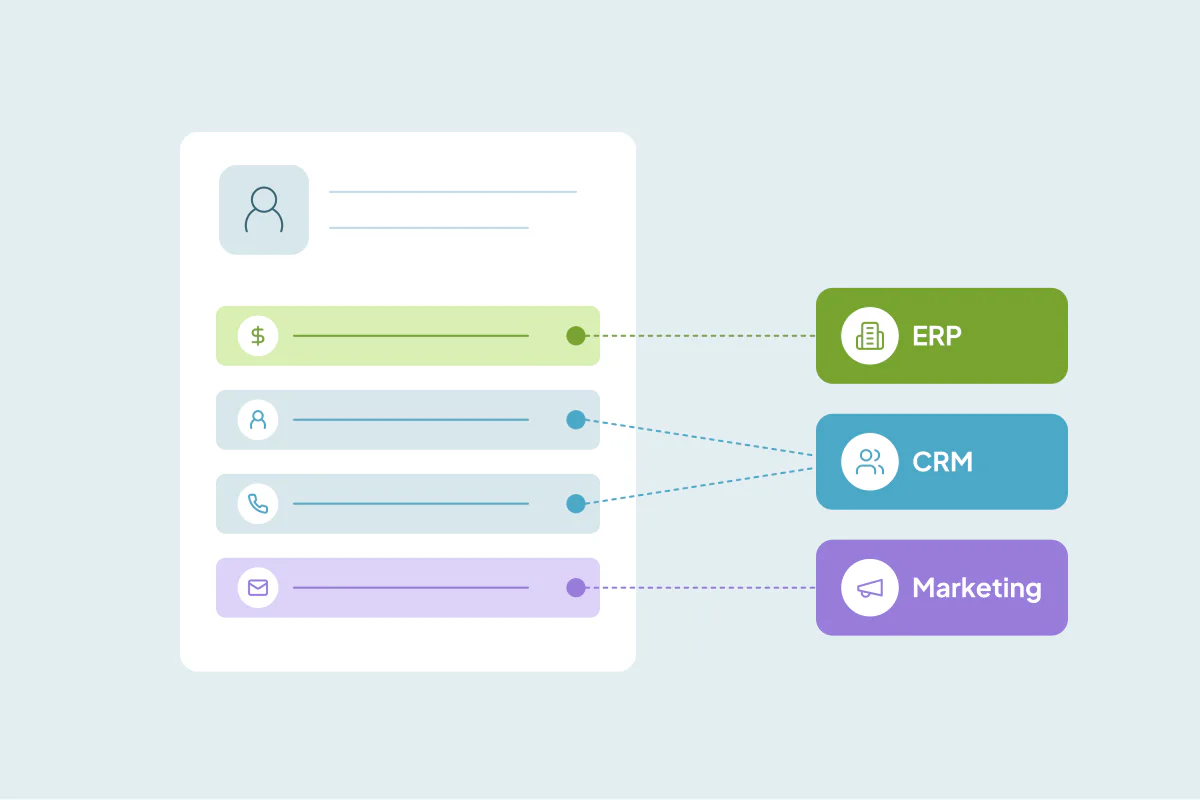
Teams often look for a single system that's right about everything. In practice, each system is right about different things:
- The ERP or billing tool knows the legal name, billing address, tax ID and payment status.
- The CRM knows the contacts, the conversations, the deals and who owns the relationship.
- The marketing tool knows email engagement, subscriptions and consent.
So ownership works better by field than by system.
Decide ownership field by field
| Data | Usually owned by | Why |
|---|---|---|
| Legal name, billing address, tax ID | ERP or billing | Finance needs it exact |
| Customer or account ID | The system that creates the customer | Other systems point to it |
| Contacts, phone, job title | CRM | Reps keep it current |
| Deals, pipeline, owner | CRM | Sales works there |
| Subscriptions and consent | Marketing tool | It's where people opt in and out |
| Payment status, invoices | ERP or billing | It's the only system that knows |
Once ownership is written down, configure each sync so the owning system's value wins, and other systems only read it.
Who creates the record matters most
The system that creates a customer usually owns its identity. If customers are created in the CRM and pushed to the ERP, the CRM record is the original, and the ERP stores the CRM's ID. If they're created in the ERP when an order comes in, the ERP's customer number is the anchor.
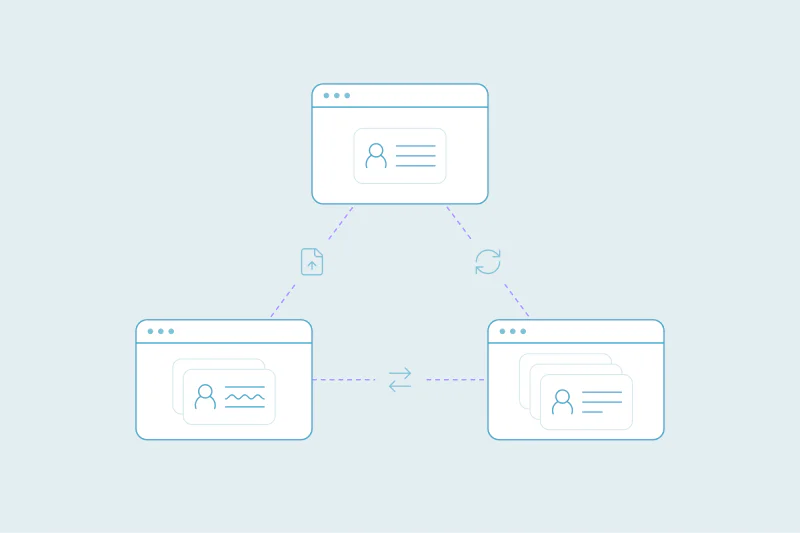
Duplicates appear when both systems create customers independently and the sync can't connect them. Picking one creator, or making sure the other system looks up existing records first, prevents most of them.
Clean in the owning system first
When duplicates already exist on both sides, clean the owning system first, then let the sync carry the fix. If you merge in the CRM but the ERP still has two customers pointing at two old CRM records, the next sync can bring a duplicate back.
Before merging records that another system points to, keep the record that system uses as the surviving one. How to manage recurring duplicates from CRM integrations covers stopping duplicates that keep returning through a sync.
How Dedupely fits into a multi-system setup
Dedupely cleans the CRM side. It matches on any synced field, including an external ID from your ERP, and Merge Rules let you decide which record survives and which value wins in each field, so the owning system's data is kept. Syncing with Dedupely never changes your CRM; only merges do.
Ownership stops the back-and-forth
When several systems hold the same customer and nobody owns the record, syncs create duplicates and overwrite each other. Decide ownership field by field, let the creating system own the ID, and clean the owning system first.
Frequently asked questions
Which system should be the source of truth for customer data?
Usually more than one, by field. The ERP owns billing and legal data, the CRM owns contacts and deals, and the marketing tool owns consent.
Why do syncs between a CRM and an ERP create duplicates?
When a sync can't find a matching record, it often creates a new one. Without clear ownership and a shared ID, both systems keep creating customers independently.
Which record should survive a merge when another system points to it?
The one the other system uses. Otherwise the next sync may not find its record and create a new one.
Should I clean duplicates in the CRM or the ERP first?
In the system that owns the record. Then let the sync carry the fix to the other side.
Does the marketing tool need to own any customer data?
Usually subscriptions and consent, because that's where people opt in and out.



 Or sign up with Google
 HubSpot Marketplace