

TL;DR
- Buyers and investors often check customer counts and pipeline against CRM data.
- Duplicate companies and deals inflate customer counts, pipeline and contact totals.
- Numbers that don't match billing or contracts raise questions during due diligence.
- Clean the CRM before a sale or a raise, well before any review starts.
- Dedupely finds and merges duplicates behind your key numbers and records every merge it makes.
When a company prepares for a sale or a funding round, its CRM becomes evidence. Customer counts, pipeline and growth figures often start there, and someone outside the company may check them.
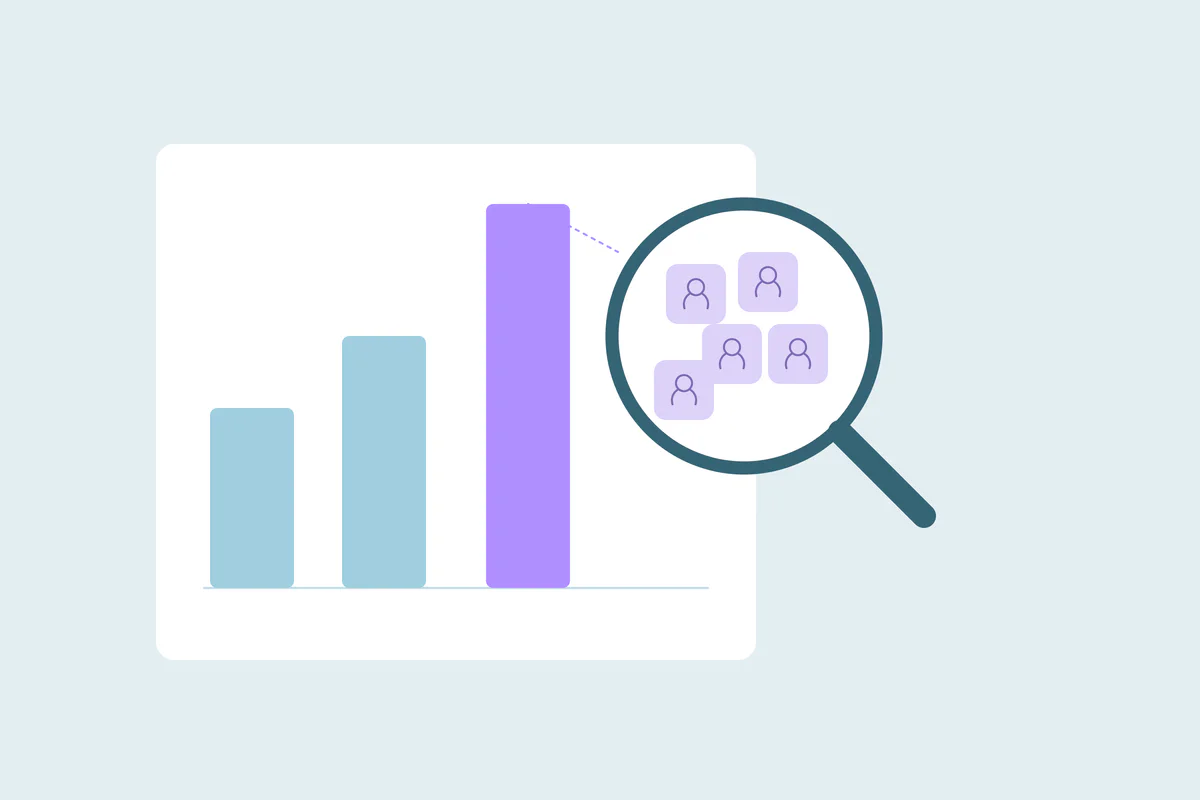
Duplicates make those numbers larger than they are. One customer stored twice counts as two, and one deal entered twice doubles its value in the pipeline.
In this post, you'll see which numbers duplicates distort, why mismatches matter in a review and what to clean first. You'll also see why timing matters, and how to document the cleanup. This is about CRM accuracy only; your advisors decide what a review needs.
Why the CRM comes up in due diligence
Due diligence is the review a buyer or investor does before a deal. Its scope varies from deal to deal. Commercial questions often include how many customers you have, how your pipeline converts and how retention looks.
Those answers often come from the CRM, or get compared with it. A reviewer may check a sample of accounts against contracts or invoices, or rebuild a report from an export.
That's where duplicates surface. A number that looked fine in a dashboard can fall apart when someone counts records one by one.
Where duplicates distort the numbers
Duplicates affect each number differently. Some inflate a count, others split one customer's history across records.
Customer and account counts
Two company records for one customer count as two customers. Name variations, like a suffix or a different spelling, often keep them apart.
When a reviewer compares the CRM's customer count with the billing system, the gap needs an explanation.
Pipeline
A deal entered twice, by two reps or by an integration, adds its value twice. Our post on how duplicate deals inflate your pipeline covers how that happens.
Win rates suffer too. A duplicate deal left open, or closed as lost, changes the ratio of won to lost deals.
Retention and churn
When one customer is split across two records, one can look active and the other lost. Churn reports can then count a customer who never left.
Expansion revenue can hide the same way, recorded on a second account instead of the original.
Contact and database size
Some companies present the size of their contact database or audience. Duplicate contacts inflate that number, and a reviewer who counts unique emails will find a smaller one.
Numbers to compare before anyone else does
| Number | How duplicates distort it | What to compare it with |
|---|---|---|
| Customer count | One customer stored as two or more companies | Active customers in billing or contracts |
| Pipeline value | The same deal entered more than once | Open deals checked by account and amount |
| Win rate | Duplicate deals left open or closed as lost | Won deals against signed contracts |
| Churn and retention | One record active, another for the same customer lost | Billing history for the same customer |
| Contacts | The same person stored several times | Unique emails in the contact list |
Clean well before the review starts
Clean your CRM before the review starts. A cleanup done months ahead is routine maintenance, and the numbers a reviewer sees are already the clean ones.
A record of what changed is what makes the cleanup easy to explain.
What to clean first
You don't need a perfect CRM before a deal. Focus on the records behind the numbers someone will check.
Agree on what counts as a duplicate
What counts as a duplicate is case by case. Subsidiaries, regional offices and a parent company may be one customer for some teams and several for others.
Decide how you count customers, write it down and apply it the same way across the CRM. A reviewer can accept a clear definition more easily than an inconsistent one.
Start with companies and open deals
Companies behind the customer count and open deals behind the pipeline matter most here. Begin with exact matches on domain for companies, then check open deals by company and amount.
To size the problem first, our guide on finding out how many duplicates your CRM has shows how to measure each object.
Check customer status fields
After merging, check that each customer has one status, one owner and one renewal date. A merge that keeps the wrong status turns an active customer into a lost one.
Document what you changed
Keep the counts from before and after the cleanup, per object. Keep the definition you used, and a record of every merge with the original values.
When a reviewer asks why the customer count dropped, you can show the duplicates that were merged and the rule that found them.
After the deal closes
If the deal goes through and two CRMs need to come together, the same principles apply on a larger scale. Our guide on deduplicating before, during and after a CRM migration covers merging two CRMs after an acquisition.
How Dedupely helps you prepare your CRM for due diligence
Reconcile the cleaned totals to contracts and billing. Removing duplicates can explain a reporting gap, but it does not validate recognized revenue, retention calculations or the figures used in a transaction.
In Dedupely, you build duplicate searches on the objects behind your key numbers, and each one shows the number of matches and records. You preview each merge and send unclear sets to review. Every merge is recorded with its original values, ready to export as a CSV.
Numbers you can stand behind
In due diligence, the CRM is a source someone else may check. Duplicate companies, deals and contacts make customer counts, pipeline and retention look different from what billing and contracts show.
Cleaning ahead of time, with a clear definition and a record of every merge, turns those numbers into ones you can explain. That helps whether the review comes from a buyer, an investor or your own board.
Frequently asked questions
Why does CRM data matter in due diligence?
Because customer counts, pipeline and retention figures often come from the CRM or get compared with it. A buyer or investor may check a sample of accounts against contracts or billing. If duplicates inflate the CRM's numbers, the gap needs an explanation, which can slow the review down.
How do duplicates affect customer counts?
Each duplicate company record counts as an extra customer. One customer stored as two companies, often because of a name variation, doubles in the count. Comparing the CRM's customer count with active customers in your billing system is a quick way to see how large the gap is.
Should you clean your CRM before selling a company?
Cleaning ahead of a sale makes the numbers easier to explain, and a cleanup done months before a review reads as maintenance. Focus on the companies and deals behind your key numbers. Document your definition, and keep before and after counts and a record of every merge.
Can duplicate deals inflate pipeline?
Yes, a deal entered twice, by two reps or by an integration, adds its value twice to the pipeline. Duplicate deals left open or closed as lost also change the win rate. Check open deals by company and amount to find them before anyone reviews the pipeline.
When should you clean CRM data before due diligence?
Before the review starts, ideally months ahead, so the cleanup reads as routine maintenance. Start with the companies and open deals behind your customer count and pipeline. Keep before and after counts per object, the definition you used and a record of every merge with its original values.




 Or sign up with Google

 HubSpot Marketplace